
The Complete Guide to Mobility Scooter Battery Replacement (2026 Edition)
Did you know that over 350,000 people in the UK rely on mobility scooters for their daily independence, yet many only realise they need a mobility scooter battery replacement when they're already stranded? It's a common frustration to see your travel range diminish or to feel the anxiety of a stalling motor whilst you're far from a charging point. You likely want to ensure your equipment remains dependable without the confusion of complex technical specifications or the fear of causing electrical damage during a DIY fitment.
This guide provides the exact technical data you need to restore your vehicle to its original factory performance. We'll help you master the selection process, from understanding the critical differences between AGM and Gel chemistries to decoding Amp Hour (Ah) ratings for maximum efficiency. You'll learn how to identify the correct Lucas 12V units for your specific 24V system and follow a methodical approach to installation. This article outlines the steps to secure a reliable power source, focusing on maintenance-free, deep-cycle solutions that ensure your equipment operates with the durability and performance required for daily use.
Key Takeaways
- Identify technical signs of battery degradation, such as reduced torque on inclines, to avoid being stranded by misleading dashboard indicators.
- Master the selection of 12V AGM deep-cycle units by matching Ah ratings to your specific vehicle requirements for a successful mobility scooter battery replacement.
- Follow safe installation procedures for heavy 34Ah or 55Ah batteries, ensuring the ignition is off and the charger is disconnected before handling.
- Optimise long-term performance by implementing an 8 to 12-hour charging protocol and allowing for the initial 20-cycle break-in period.
- Understand why premium British brands like Lucas provide superior reliability and range compared to generic, non-specialist alternatives.
Identifying the Need for Mobility Scooter Battery Replacement
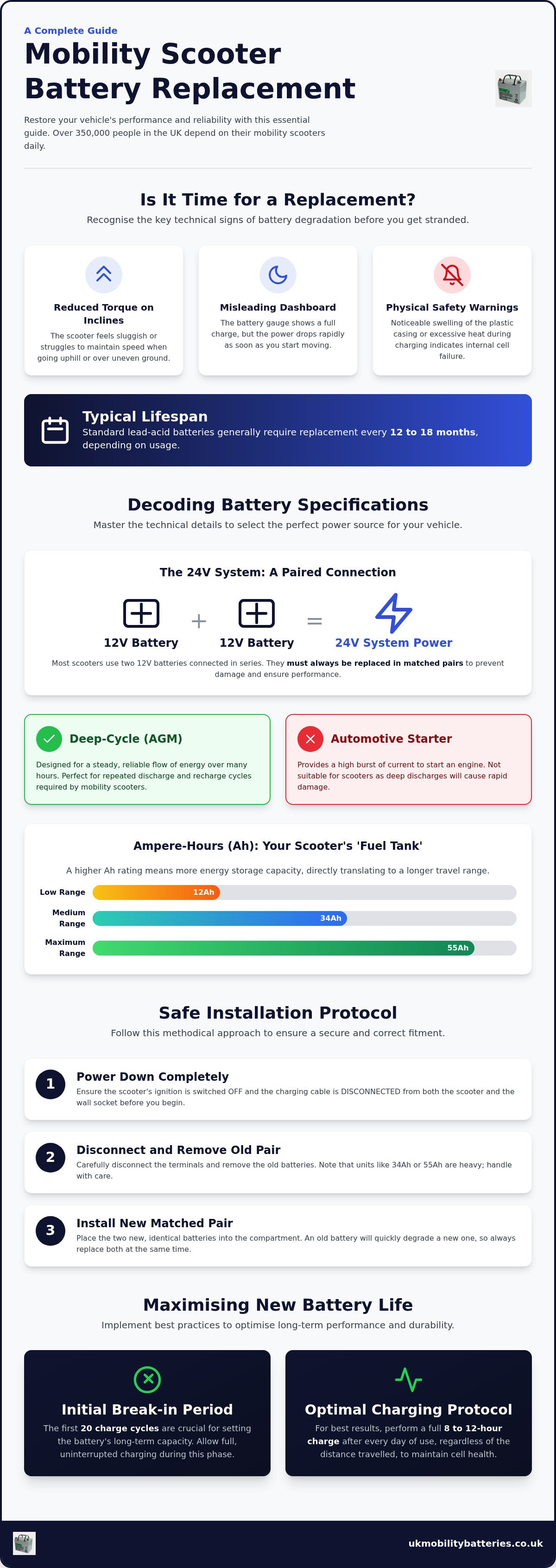
Recognising when your vehicle requires a mobility scooter battery replacement is essential for maintaining safety and reliability. Most users notice a distinct change in the performance profile of their machine before it fails completely. This typically manifests as a sluggish response when navigating inclines or travelling over uneven terrain. While the motor may still function, it lacks the torque required to maintain a consistent speed under load because the internal chemical components can no longer provide the necessary current.
Dashboard indicators can be highly misleading for older units. These gauges typically measure voltage levels rather than the actual remaining capacity. An aged battery might show a full charge whilst stationary; however, the moment the motor engages, the voltage collapses. This causes the indicator to drop rapidly, often leading to the scooter stopping unexpectedly despite the display suggesting plenty of power remains. A mobility scooter relies on a stable 24V output, and even a slight drop in one of the two 12V cells can trigger a safety cut-out.
Standard lead-acid batteries generally require replacement every 12 to 18 months. This lifespan depends heavily on discharge depth and charging frequency. Beyond performance, you should monitor for physical safety signs. If you detect excessive heat during the charging cycle or notice the plastic casing is swelling, the internal cells are likely failing. Physical deformation is a serious safety warning that indicates the battery is no longer fit for use and must be recycled immediately.
Performance Indicators of Imminent Battery Failure
When a battery reaches the end of its service life, its internal resistance increases. This resistance prevents the battery from delivering high currents quickly, leading to several specific technical failures:
- Sudden voltage drops when accelerating from a stationary position.
- Increased charging times that fail to result in the expected mileage or range.
- The "cut-out" phenomenon whilst navigating small kerbs or obstacles, where the surge in power demand exceeds the battery's output capability.
You might find your scooter performs adequately on flat, smooth pavements but shuts down entirely when attempting to mount a pavement or cross a threshold. This is a clear sign that the cells can no longer handle high-load scenarios.
Testing Your Batteries for Health and Capacity
A multimeter is the most effective tool for a definitive diagnosis. A healthy 12V battery should show a resting voltage of approximately 12.6V to 13V when fully charged and disconnected from the charger for at least an hour. If the voltage drops significantly below 12V when you apply a "load" (by attempting to drive the scooter), the battery is spent.
You must always test and replace your batteries in pairs. Since they are connected in series to create a 24V system, an old battery will quickly degrade a new one if they aren't matched in age, chemistry, and capacity. For a more detailed diagnostic guide, refer to our mobility scooter battery troubleshooting resources to identify specific failure signs and fixes.
Understanding Battery Specifications: Ah, Volts, and AGM Technology
Understanding the technical specifications of your power source is the first step toward a successful mobility scooter battery replacement. Most mobility scooters operate on a 24V electrical architecture. This system requires two 12V batteries connected in series. It's vital to use deep-cycle batteries rather than automotive starter versions. Starter batteries provide a high burst of current to turn an engine; in contrast, deep-cycle cells provide a steady energy flow over several hours. This construction allows for hundreds of discharge and recharge cycles without internal plate damage.
Ampere-hours (Ah) denote the total capacity of the battery. You can think of this as the size of the fuel tank for your motor. A higher Ah rating indicates a larger capacity to store energy. For example, a Lucas 12V 50Ah Mobility Battery provides significantly more range than a 12Ah unit. Whilst voltage remains constant at 12V per unit, the Ah rating determines how many miles you can travel before the voltage drops below the operational threshold and the scooter stops.
Selecting the Correct Amp Hour (Ah) Rating
Physical dimensions are intrinsically linked to capacity. As the Ah rating increases, the lead plates inside the battery grow larger, which increases the external casing size. You can often upgrade within the same physical footprint to gain more range. A common example is replacing standard Lucas 12V 7Ah units with a Lucas 12V 9Ah Uprated Sealed AGM Battery. This 28% increase in capacity often fits the same battery box, providing extra mileage without requiring modifications. However, upgrading from a 34Ah to a 55Ah unit is usually impossible because the larger battery won't fit the physical constraints of the scooter's chassis. Always measure your battery compartment before attempting to increase capacity.
Why Sealed AGM is the Industry Standard for Mobility
Absorbent Glass Mat (AGM) technology uses a fibreglass mat to soak up the sulphuric acid, making the battery non-spillable and leak-proof. This design is essential for safe indoor use and travel on public transport. Unlike traditional flooded batteries, AGM units are maintenance-free; you don't need to check or top up electrolyte levels. They also offer superior vibration resistance, which is necessary when navigating uneven pavements or gravel paths. Adhering to MHRA safety recommendations ensures your equipment meets UK performance standards. Whilst some high-end scooters use Gel or Lithium, AGM remains the most cost-effective and reliable choice for a standard mobility scooter battery replacement.
How to Safely Replace Your Mobility Scooter Batteries
Safety is the primary consideration when performing a mobility scooter battery replacement. Before you begin, you must ensure the ignition is switched off and the external charger is completely disconnected from both the mains and the vehicle. This prevents electrical surges and accidental motor engagement whilst you are handling live components. It's also a technical best practice to take a clear photograph of the existing wiring loom before you disconnect any cables. This visual reference ensures you can replicate the exact series connection required for the 24V system during reassembly.
Managing the physical weight of the units is another critical factor. Whilst smaller 7Ah or 12Ah batteries are relatively manageable, larger units like the Lucas 12V 55Ah Sealed AGM Mobility Batteries weigh significantly more, often exceeding 15kg per unit. Always lift with your legs and, if possible, have a second person assist with the removal of the old cells from the chassis to avoid injury. Once removed, don't dispose of lead-acid batteries in household waste. In the UK, you must take them to a local recycling centre or a specialist battery retailer to comply with environmental regulations regarding hazardous waste disposal.
Identifying Terminal Types and Connectors
You must verify that the terminal configuration of your new batteries matches your scooter's connectors. Smaller boot scooters typically use "spade" terminals, which come in two standard sizes: T1 (4.75mm) and T2 (6.35mm). Larger road-legal models often utilise "insert" or nut-and-bolt terminals for a more secure, high-current connection. Battery polarity refers to the specific arrangement of the positive (red) and negative (black) terminals, which must match the vehicle's wiring to prevent catastrophic electrical failure. Incorrectly connecting the positive lead to a negative terminal will cause an immediate short circuit, likely blowing the main fuse or damaging the electronic controller.
Step-by-Step Installation Procedure
Access the battery compartment by removing the seat and the protective plastic shroud. Once the old units are out, use a dry cloth or a wire brush to clean the terminal connectors; this removes oxidation that can cause resistance and unnecessary heat build-up. Place the new batteries into the tray and ensure they are seated firmly. Use the original straps or brackets to secure the batteries to prevent movement whilst the scooter is in motion. For a more comprehensive visual walkthrough, consult our guide on how to change mobility scooter batteries to ensure every connection is technically sound.
Maximising Battery Life After Replacement
Securing a successful mobility scooter battery replacement is only the first stage in restoring your vehicle's reliability. New AGM batteries do not reach their peak capacity immediately upon installation. They require a "break-in" period of approximately 15 to 20 full charge and discharge cycles before the internal lead plates reach maximum chemical efficiency. During this initial phase, you might notice your range is slightly shorter than expected; this is a normal technical characteristic of deep-cycle cells and will improve as the battery matures.
Adhering to a strict charging protocol is the most effective way to prevent premature failure. You should aim for a charging duration of 8 to 12 hours after every significant use. Partial charging, or "topping up" for only an hour or two, is detrimental to the battery's health. This practice leads to sulphation, a process where lead sulphate crystals harden on the plates and permanently reduce the battery's ability to hold a charge. Maintaining a full charge cycle ensures the chemistry remains active and prevents this crystallisation from occurring.
Charging Best Practices for New Units
You must never leave a battery in a discharged state for more than 24 hours. If the voltage remains low for extended periods, the chemical degradation becomes irreversible. It's essential to use an intelligent charger that matches the Ah rating of your units. These chargers use a multi-stage profile to deliver high current initially before dropping to a "float" charge to maintain the battery without over-heating the cells. For specific technical limits on charging safety, read our guide on can you overcharge a mobility scooter battery to protect your investment.
Winter Storage and Care Requirements
Environmental factors significantly impact performance, particularly in the UK's damp and cold climate. Cold temperatures slow down the chemical reactions inside the battery, which temporarily reduces your travel range. If you don't intend to use your scooter during the winter months, store the batteries in a cool, dry place. You must perform a monthly "top-up" charge during periods of inactivity to compensate for natural self-discharge. Ensure the terminals are kept clean and dry to prevent corrosion, especially if the scooter is kept in a garage or shed. If you require a new power source to begin this maintenance cycle, browse our range of premium Lucas AGM batteries for nationwide UK delivery.
Sourcing Premium Replacement Batteries in the UK
Selecting a high-quality manufacturer is the final step in a successful mobility scooter battery replacement. Generic cells often suffer from inconsistent plate density and lower-grade lead, which results in unpredictable discharge rates and shortened lifespans. Lucas mobility batteries represent a legacy of reliability within the UK market. These units are engineered specifically for the repetitive, deep-discharge cycles required by modern mobility equipment. By choosing a trusted British brand, you ensure that the technical specifications on the label match the actual output of the battery, providing peace of mind whilst travelling away from home.
Matching your scooter model to the correct Lucas battery pack requires attention to the original equipment manufacturer (OEM) specifications. Whilst many scooters look similar, their power requirements vary significantly based on motor size and weight capacity. Using a premium cell ensures that the internal chemistry can handle the sustained current draw of your specific motor without overheating. This technical consistency is why specialists recommend Lucas for users who prioritise long-term reliability over the lowest initial purchase price.
The Advantages of Lucas Deep Cycle Technology
Lucas AGM technology provides an enhanced cycle life that budget alternatives cannot replicate. These batteries utilise reinforced lead plates and high-density separators to withstand hundreds of full recharge cycles. The Lucas 12V 34Ah and Lucas 12V 50Ah models are particularly popular for mid-to-large scooters, offering the high current output necessary for road-legal Class 3 vehicles. This same durability makes Lucas AGM batteries the preferred choice for electric wheelchairs, where consistent power delivery is a non-negotiable safety requirement for daily independence.
Ordering Online for Fast National Delivery
UK Mobility Batteries functions as a national specialist retailer, offering technical support to simplify the identification process. Identifying the correct capacity amongst various Ah ratings is critical for vehicle compatibility. Our technical staff helps you verify terminal layouts and dimensions before you commit to a purchase. We organise secure transit for these heavy lead-acid products, using specialised couriers to ensure the units remain upright and protected during national delivery. This logistical expertise removes the difficulty of transporting 34Ah or 55Ah units from a local shop. Accessing expert technical support ensures you receive the correct power solution for your specific equipment.
View our full range of Lucas mobility batteries for fast UK delivery
Ensuring Long-Term Performance and Independence
Executing a successful mobility scooter battery replacement requires a methodical approach to technical identification and installation. By matching your vehicle’s specific 24V requirements with premium deep-cycle AGM cells, you eliminate the risk of power failure and restore your original factory range. It's essential to remember that maintaining these units through disciplined charging protocols and proper winter storage is just as critical as the initial fitment for long-term durability.
Restoring your mobility should not be a process of guesswork. Utilising high-performance components ensures your vehicle remains a dependable tool for daily life. We provide the technical specifications and specialist expertise needed to make an informed decision for your equipment. This ensures you avoid the frustration of incompatible parts or reduced performance profiles.
Browse our range of Lucas replacement mobility batteries to benefit from premium Lucas deep-cycle technology and expert UK technical support. With fast national delivery available across the United Kingdom, you can quickly return to the road with total confidence in your power source. Your independence relies on the quality of your equipment; choose the reliability your scooter deserves.
Frequently Asked Questions
Can I replace my 42Ah mobility scooter batteries with 50Ah ones?
Yes, you can replace 42Ah batteries with 50Ah units provided the physical dimensions are identical. Many 50Ah batteries share the same footprint as 42Ah versions, allowing for an upgrade in range without modifying the battery box. You must check the height, width, and depth measurements before purchase. Increasing the Amp Hour rating acts like fitting a larger fuel tank, extending the distance you can travel between charges.
Do I need to replace both mobility scooter batteries at the same time?
You must always replace both batteries at the same time. Because mobility scooters use two 12V batteries connected in series to create a 24V system, they must have identical age, capacity, and internal resistance. If you mix a new battery with an old one, the stronger unit will work harder to compensate for the weaker cell. This imbalance leads to rapid degradation and premature failure of the new unit.
How long do mobility scooter replacement batteries usually last?
Most mobility scooter replacement batteries last between 12 and 18 months under normal usage conditions. This lifespan depends heavily on how deeply you discharge the units and how consistently you charge them. Frequent deep discharges below 50% capacity will shorten the service life. With optimal care and regular 8 to 12-hour charging cycles, some high-quality Lucas AGM units can remain functional for up to 24 months.
What is the difference between AGM and Gel mobility batteries?
AGM batteries use a fibreglass mat to absorb electrolyte, whilst Gel batteries use a silica-based paste to thicken the acid. AGM is generally more cost-effective and provides better performance for high-current demands and vibration resistance on pavements. Gel batteries are often more resilient to deep discharge recovery but require specific charging profiles. For most standard mobility scooter battery replacement needs, AGM remains the industry-standard choice for reliability.
Can I use a standard car battery charger on my mobility scooter?
You cannot use a standard car battery charger on a mobility scooter. Car chargers are designed for starter batteries and often deliver a high-voltage charge that is too aggressive for sealed AGM or Gel units. This can cause the safety valves to open and the battery to dry out or swell. Always use an intelligent, multi-stage 24V charger specifically designed for deep-cycle mobility batteries to ensure safety and longevity.
Why is my new mobility scooter battery not lasting as long as expected?
New batteries often seem underpowered because they require a break-in period of 15 to 20 cycles to reach full chemical capacity. If performance is still poor after this period, check for mechanical issues like binding brakes or worn motor brushes. Ensure you are charging the units for the full recommended 8 to 12 hours. Partial charging prevents the mobility scooter battery replacement from reaching the voltage required for peak efficiency.
Are mobility scooter batteries allowed on aeroplanes?
Sealed AGM and Gel batteries are generally allowed on aeroplanes because they are classified as non-spillable. You should notify your airline at least 48 hours before travel to confirm their specific requirements. Most airlines require you to disconnect the batteries and insulate the terminals to prevent short circuits. For lithium-ion systems, strict Watt-hour limits apply, typically 300Wh for a single battery or 160Wh each for dual systems.
How do I dispose of my old mobility scooter batteries in the UK?
You should dispose of old lead-acid batteries at a local household waste recycling centre or through a specialist retailer. It is illegal to put these batteries in your domestic wheelie bin because they contain hazardous lead and sulphuric acid. Most UK recycling centres have dedicated bins for lead-acid units. Recycling ensures that up to 98% of the battery components can be reclaimed and reused in the manufacturing of new cells.