
Is It Easy to Replace Wheelchair Batteries Yourself? 2026 Guide
A battery replacement can look like a straightforward swap, but the wrong fit or a reversed connection can damage a wheelchair. If you’re asking, “is it easy to replace wheelchair batteries myself?”, the answer depends on your chair’s battery access, the manufacturer’s instructions and whether you can handle the batteries safely.
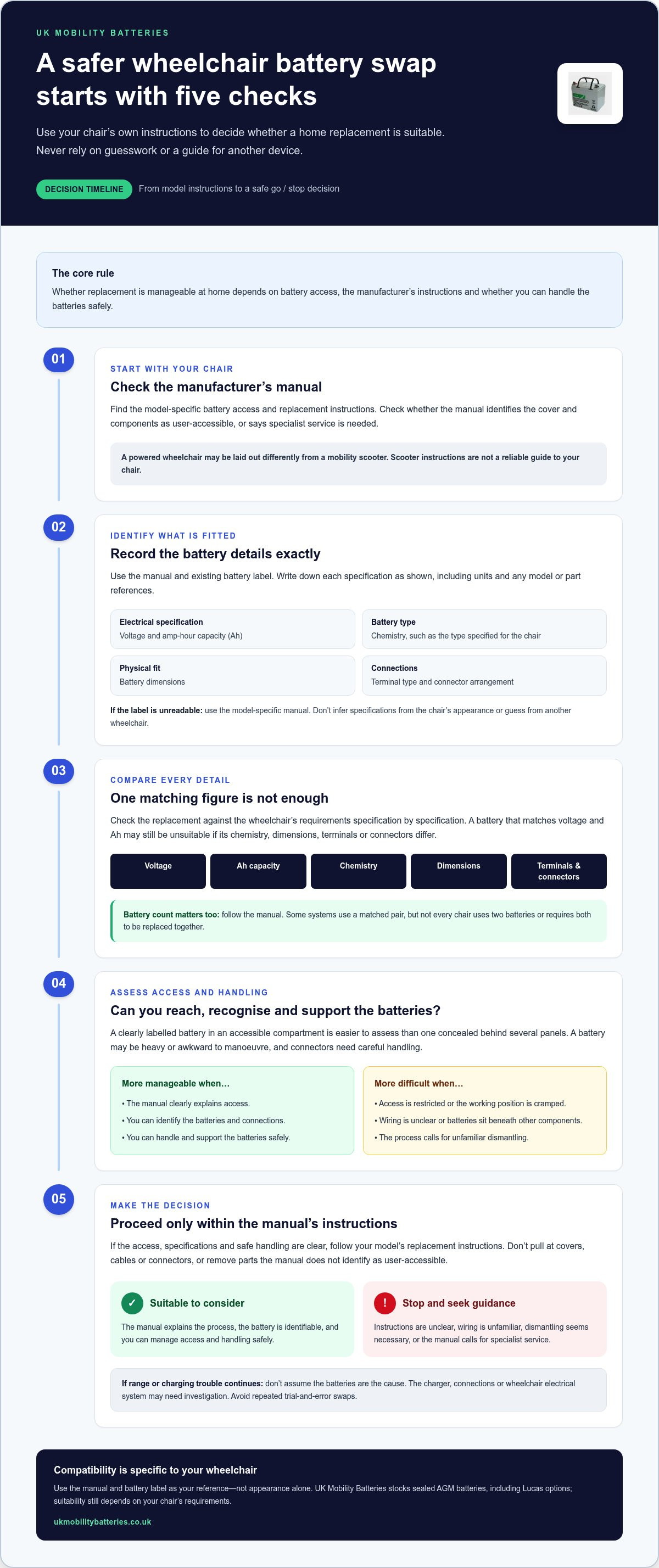
Before buying anything, use the wheelchair manual and the existing battery label to check voltage, amp-hour (Ah) capacity, chemistry, terminal type and dimensions. Then consider whether you can access and secure the batteries without straining cables or risking a connection error. Some models may require a technician, so follow the manufacturer’s guidance rather than assuming every chair uses the same replacement process.
This 2026 guide explains how to decide whether a home replacement is manageable, what to match before ordering and which safety checks matter. It also covers when to stop and seek technical help, so you can avoid preventable fitting mistakes and protect the chair’s electrical system.
Key Takeaways
- Whether is it easy to replace wheelchair batteries myself depends on your model’s access and the manufacturer’s instructions.
- Use the wheelchair manual and existing battery label to record the specifications before choosing a replacement.
- Compare voltage, amp-hour capacity, battery chemistry, dimensions and terminal type to help avoid a mismatch.
- Prepare carefully and follow your model’s replacement instructions. Stop if access, wiring or battery condition raises safety concerns.
- UK Mobility Batteries stocks sealed AGM batteries, including Lucas options, but compatibility depends on your wheelchair’s requirements.
Is it easy to replace wheelchair batteries yourself? Start with the access
Some wheelchair battery replacements are manageable at home, but there’s no universal answer to “is it easy to replace wheelchair batteries myself?” Battery position, cover design and connector arrangement vary by model. Start with the manufacturer’s manual and check how the batteries are accessed. Don’t assume your chair follows instructions written for another device. An electric wheelchair depends on its battery system for power, but its battery compartment may be designed differently from a mobility scooter’s.
Quick DIY suitability check: Consider proceeding only if the manual explains how to access the batteries, you can identify them and their connections clearly, and you can handle them safely. Stop if the process involves unfamiliar wiring, difficult dismantling or instructions that call for specialist service.
What makes a wheelchair battery replacement straightforward?
A clearly labelled battery in an accessible compartment is easier to assess than one concealed behind several panels. A cover that the manual identifies as removable can make access simpler, provided it comes away as instructed and doesn’t expose unfamiliar components. Model-specific guidance helps you locate the batteries, understand how they are secured and identify the connectors without relying on a generic diagram.
Basic familiarity with tools can help, but it isn’t the only consideration. Batteries can be heavy or awkward to manoeuvre, and connectors need careful handling. If you can’t lift a battery steadily, keep it supported while moving it or identify its connections confidently, the task may not be suitable to do alone. Ease depends on safe handling and access as much as on the number of steps.
What can make the job difficult?
Restricted access, a cramped working position, unclear wiring or a battery secured beneath other components can make a simple-looking swap more demanding. The manual may also give device-specific service instructions that limit what a user should remove. A powered wheelchair’s layout can differ from a mobility scooter’s, so scooter-focused instructions aren’t a reliable guide to your chair.
Stop if you’d need to dismantle structural parts or electrical components that the manual doesn’t identify as user-accessible. Don’t pull at a cover, cable or connector just because it appears to be in the way. If the instructions are unclear when you need to disconnect or remove something, pause and seek appropriate technical guidance rather than guessing.
Battery replacement isn’t the same as fault diagnosis
A battery change may address worn batteries, but reduced range or charging trouble doesn’t automatically mean the batteries are at fault. Other factors, including the charger, connections or the wheelchair’s electrical system, may need investigation. If symptoms continue after replacement, or the chair behaves unexpectedly, avoid repeated trial-and-error swaps. First establish that the fault is understood and that the replacement process is suitable for your model.
Which wheelchair batteries do you need before starting a replacement?
Identify the required battery before ordering. Use the wheelchair’s manual and the existing battery label as your starting points, and record the information exactly as shown, including units and any model or part references. If a label is difficult to reach, don’t guess from the chair’s appearance or from another wheelchair with a similar design. Differences in specification or physical fit can matter.
For a practical overview of selection factors, see this electric wheelchair battery buying guide. Compare each specification separately rather than treating one matching figure as proof of compatibility.
How do you identify the battery specifications?
Check the manual first, then compare its instructions with the existing battery label. Voltage is the electrical rating the wheelchair’s system requires. Amp-hour capacity, shown as Ah, indicates the battery’s rated capacity, but it doesn’t by itself establish that a battery will fit or suit the chair. Check the values independently, and don’t assume every wheelchair uses the same voltage or capacity.
Also record the battery chemistry, physical dimensions, terminal type and connector arrangement. Chemistry matters because the wheelchair’s charging system is designed for a particular battery type. Dimensions determine whether a battery can fit in the compartment, while its terminals and connectors must match the device’s specified arrangement. A battery can match the voltage and Ah rating but still be unsuitable if another detail differs.
If the label is obscured or unreadable, use the model-specific manual to identify the correct information. Don’t infer specifications from the wheelchair’s size, appearance or battery compartment alone.
Do wheelchair batteries need replacing as a pair?
Not necessarily. Some wheelchair systems use a matched pair, but the number of batteries and replacement instructions depend on the model. Follow the manufacturer’s guidance rather than assuming every chair uses two batteries or that both always need replacing together.
If the manual specifies a matched pair, record the details for both batteries. Mixing batteries with different specifications or substantially different condition could create a mismatch within the system, so don’t decide to replace only one without checking the model’s instructions. If the configuration or wiring advice is unclear, pause before ordering or disconnecting anything.
- Voltage: Match the value specified for your wheelchair.
- Capacity: Compare the Ah rating shown in the manual or on the original battery.
- Chemistry: Follow the battery type specified for the chair and its charging system.
- Fit and connection: Check the dimensions, terminal type and connector arrangement.
Once you have a complete specification, you can compare it with sealed AGM options, including Lucas batteries, without assuming every battery in a range fits every wheelchair. UK Mobility Batteries provides technical battery support to help you understand your requirements.
When is replacing wheelchair batteries yourself not a good idea?
DIY replacement may be manageable when the battery compartment is designed for user access and the instructions are clear. But the answer to “is it easy to replace wheelchair batteries myself” changes if the job involves unfamiliar panels, uncertain specifications or connections you can’t identify. Basic tool familiarity may not be enough: some wheelchair designs require service-level access or procedures, and guessing can put the chair’s electrical system at risk.
Use the checks below to decide whether to proceed. Any uncertainty about access, battery identity or wiring is a reason to pause, not improvise.
Use a simple DIY suitability checklist
Before starting, check that the manual for your exact wheelchair model describes battery replacement as a user task. Confirm that the specified cover can be removed as instructed, without force or dismantling components you don’t recognise. Compare the replacement’s specifications with the manual and original battery, and make sure the connection layout is clear. If any of these checks fail, don’t proceed alone.
- Instructions: The model-specific manual gives clear user-level replacement guidance, rather than directing the work to service personnel.
- Access: You can reach the battery without forcing a cover or removing unfamiliar structural or electrical components.
- Battery match: The replacement’s voltage, capacity, chemistry, dimensions and terminals match the wheelchair’s stated requirements.
- Connections: You can identify the wiring and polarity from the manual or clear labels, without guessing.
- Handling: You can move and support the battery safely, with help if its weight or position makes solo handling impractical.
How can you reduce the risk of damage?
Power the wheelchair down and follow the manual’s instructions for isolating it from its power source. Don’t apply a generic disconnection sequence if your model’s guidance specifies a particular method. Before moving a cable, make sure you know what it connects to and which terminal it belongs on.
Stop if polarity is unclear, wiring looks damaged or a connector won’t release using the method described in the manual. Never force a connector or allow a metal tool to bridge battery terminals. A short circuit can cause damage or injury. If a battery is swollen, leaking or has a burning smell, don’t handle it as a routine replacement.
Safe handling matters as much as correct connections. If you can’t keep the battery supported, the access position is awkward, or your mobility makes lifting and positioning difficult, don’t risk dropping it or straining yourself. Arrange suitable assistance or seek technical help. Stop as well if the manual describes the task as service-only. Don’t assume that DIY work automatically preserves or invalidates a warranty. Check the wheelchair’s own warranty terms.
If you’re uncertain about the battery specifications before ordering, UK Mobility Batteries provides expert technical support to help you interpret them.
How to prepare for a wheelchair battery replacement safely
Use the instructions for your exact wheelchair model as your procedure, not a generic sequence. Battery compartments, covers and connectors differ, so don’t assume a method shown for another chair applies to yours. The mobility scooter battery replacement guide may offer related context, but scooter layouts can differ from wheelchair designs.
What should you prepare before opening the battery compartment?
Set up before removing any cover. Work in a dry, well-lit area with the wheelchair parked securely on a level surface and enough clear space to support and position the battery. If its weight or location makes handling difficult, arrange suitable assistance rather than trying to lift it alone.
Have the wheelchair manual, replacement battery details and only the basic tools specified by the manufacturer ready. Don’t introduce unnecessary tools or use them to prise open a cover. Before disconnecting anything, photograph the existing connections clearly or make a labelled diagram. This gives you a reference for the original arrangement, but it doesn’t replace the manual’s instructions for polarity and reconnection.
Follow the manufacturer’s instructions to power down and isolate the wheelchair from its power source. The isolation method may vary by model. If the manual’s steps are unclear, or access involves components it doesn’t identify as user-removable, stop before opening or disconnecting anything.
What should you check after fitting replacement batteries?
Once the new batteries are in position, use the model-specific instructions to check the connections, secure the batteries and refit any covers or restraints. Don’t rely on appearance alone if you’re uncertain about orientation. Cables should follow their intended route, without being trapped beneath a cover or pulled tight when the compartment is closed.
Use this high-level sequence as a prompt, not a substitute for the manual. The order and access method may differ on your wheelchair.
- Park the chair securely, prepare a dry, clear workspace and gather the manual, specified tools and correctly matched batteries.
- Power down and isolate the wheelchair exactly as the manufacturer instructs.
- Open the battery compartment using the model’s stated access method, then document the connections before disconnecting them.
- Remove and position batteries only in the manner described, keeping them supported and avoiding strain on cables.
- Reconnect and secure the batteries according to the manual, then refit covers and restraints.
- Follow the stated instructions for initial charging and test the wheelchair cautiously in a clear area before normal use.
If the chair behaves unexpectedly during the check, stop and consult its instructions rather than continuing to use it. Unsure which replacement battery matches your wheelchair? Get expert battery guidance using the details from its manual and existing battery label.
Choose compatible replacement wheelchair batteries with confidence
A replacement must suit the wheelchair’s electrical requirements and fit its battery compartment. Before buying, compare the specifications in the manual and on the existing battery with every detail given for the replacement. A similar-looking battery, or one with a matching voltage alone, isn’t enough to establish compatibility.
If you’re still weighing up “is it easy to replace wheelchair batteries myself?”, accurate battery identification is an important part of the decision. UK Mobility Batteries stocks sealed AGM batteries, including Lucas batteries, but suitability depends on your wheelchair’s stated requirements. Technical support is available for battery selection questions.
How do you compare a replacement battery with the original?
Use the manual and battery label as references, then check each measurement and connection detail against the replacement listing. Record the figures before browsing so you can compare them directly. Don’t choose a higher capacity or different chemistry unless the wheelchair’s model-specific instructions support that change.
| Specification | Where to find it | Why matching matters |
|---|---|---|
| Voltage | Manual and existing battery label | Must meet the wheelchair’s electrical requirements. |
| Amp-hour capacity (Ah) | Battery label and model instructions | Shows the rated capacity; don’t assume a higher figure is suitable. |
| Chemistry | Manual and battery label | The wheelchair’s charging system is designed for a specified battery type. |
| Dimensions | Battery label or measured original battery | The replacement must fit the compartment and be secured as instructed. |
| Terminal type and connector arrangement | Existing battery and wheelchair instructions | Connections need to match the device’s requirements and layout. |
Check every listed measurement, not just the headline rating. If the original label is difficult to read or the manual and label appear to differ, don’t fill in the gaps by guessing. Use the wheelchair model information and seek technical guidance before selecting a replacement.
What should happen to the old batteries?
Don’t put old wheelchair batteries in household waste. Battery recycling and disposal guidance can change, so check current UK guidance for the appropriate approved collection route before taking them anywhere. Keep the batteries secure while you arrange disposal, and follow any instructions that apply to their condition. Don’t assume a retailer will collect or accept used batteries.
Once you’ve checked voltage, Ah capacity, chemistry, dimensions, terminals and the wheelchair’s instructions, compare suitable sealed AGM options carefully. Browse mobility batteries and use your recorded specifications to guide your selection.
Make your next battery choice with confidence
Before placing an order, keep a record of the wheelchair model and the battery details you’ve checked. That information gives you a useful reference for future replacements and helps focus selection questions on the specifications that matter. The answer to “is it easy to replace wheelchair batteries myself” depends on your chair, but a careful battery match is a practical next step whether you plan to fit it yourself or arrange help.
UK Mobility Batteries’ sealed AGM range covers 7Ah to 150Ah and includes Lucas batteries. Expert technical support is available for battery selection, so use the details from your manual and existing battery label to guide your choice. Don’t select a battery based on one matching figure alone. Check the complete requirements for your wheelchair.
Browse mobility batteries and compare options against your recorded specifications. With the right information in hand, you can make a considered choice and move towards a suitable replacement with confidence.
Frequently Asked Questions
Is it easy to replace wheelchair batteries yourself?
It can be manageable if your wheelchair’s design allows straightforward access and its manual gives clear user instructions. The answer to “is it easy to replace wheelchair batteries myself” depends on your model, the battery’s position and whether you can handle its connections and weight safely. Before deciding, read the replacement instructions from start to finish. If they refer to service-only work or leave a step unclear, don’t proceed by trial and error.
Can I replace wheelchair batteries without disconnecting the joystick?
Possibly, but only if your wheelchair’s manual shows that the joystick can stay connected during battery replacement. Joystick cables and controls differ between models, and a cable may be routed through or close to the battery access area. Don’t unplug, move or pull on it simply to make room. If it obstructs access and the manual doesn’t explain what to do, stop and seek model-specific technical guidance.
How long does it take to replace wheelchair batteries?
There isn’t one reliable time estimate for every wheelchair. The task can take longer if access is restricted, the battery is awkward to position or the manual calls for additional steps. Allow enough time to read the instructions, work carefully and check the installation before using the chair. If you’re rushing because you need the wheelchair shortly, postponing the job until you can focus may be safer.
Can I use my wheelchair while replacement batteries are charging?
Don’t assume you can operate the wheelchair while it’s connected to its charger. Charging arrangements and any operating restrictions depend on the chair and charger, and some models may prevent movement during charging. Check both manuals for explicit guidance. If they don’t state that the chair can be used while charging, disconnect it as instructed before use rather than testing whether it will move.
Do wheelchair replacement batteries need charging before first use?
Follow the battery and wheelchair manufacturers’ instructions for first use. They may specify a charge before operation or give a particular charging procedure for the installed batteries. Use the charger approved for the wheelchair and don’t rely on a general rule based on another battery type. If the instructions for the battery and chair appear to conflict, pause and get technical advice before connecting the charger.
How should I dispose of old wheelchair batteries in the UK?
Don’t put old wheelchair batteries in your household bin. Check current UK battery-recycling guidance for an appropriate household waste recycling centre or other approved collection point, as accepted battery types and local arrangements can vary. Keep the battery secure while you arrange disposal, and follow any handling advice provided for its condition. If it’s damaged or leaking, avoid transporting it without first checking the relevant safety guidance.
Can someone with limited hand strength replace wheelchair batteries safely?
It depends on the force needed to release connectors, the battery’s weight and how much room there is to position it. Limited hand strength can make gripping, lifting or securing a battery difficult, even if the manual’s steps seem simple. Don’t compensate by pulling harder on a cable or trying to hold a battery in an unstable position. Arrange practical assistance or seek technical help if you can’t complete each step securely.
Browse mobility batteries and compare the specifications with your wheelchair manual and existing battery label.